
Textbooks
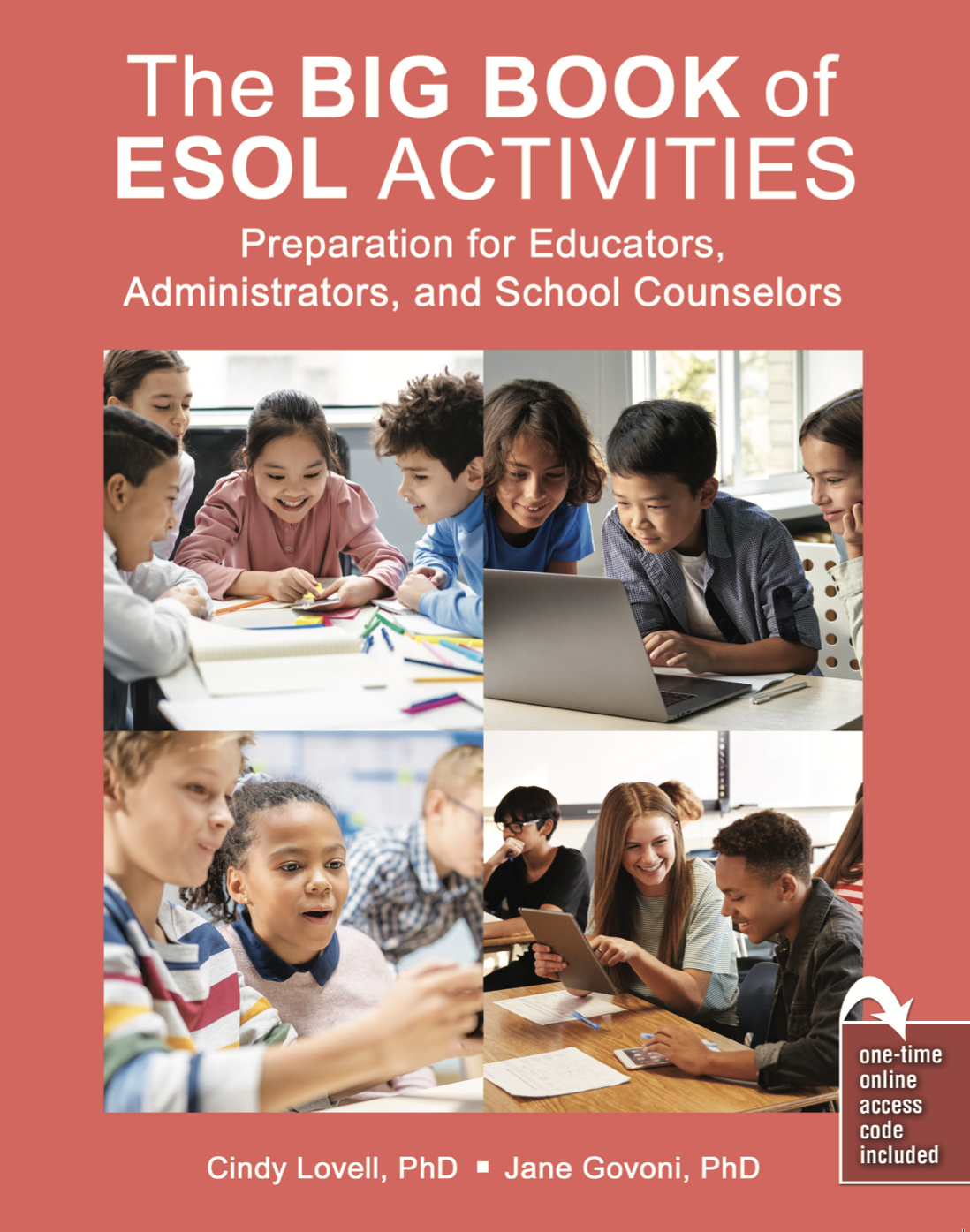
The Big Book of ESOL Activities: Preparation for Educators, Administrators, and School Counselors is a collection of ready-to-go activities for college classrooms and ESOL endorsement training. More than 60 critical concepts are introduced and reviewed through 200+ engaging activities. Through application, readers expand their knowledge and skills while developing tools to use in their schools and classrooms.
Concepts are presented alphabetically and coded for specific audiences: Educators, Administrators, and School Counselors. Many activities relate to the areas of the arts, STEM, and reading and are coded as such.
The authors have developed these activities after decades of instructing TESOL/ESOL endorsement courses at the undergraduate and graduate level. Today’s readers are looking for ways to apply what they are learning, and these innovative and engaging activities are classroom-proven. The perforated pages make it easy to tear out pages to submit for grading and other purposes, such as portfolio compilation. Most importantly, students share that these activities provide them with real-world application for their schools and are an excellent resource when reviewing for teacher certification exams.
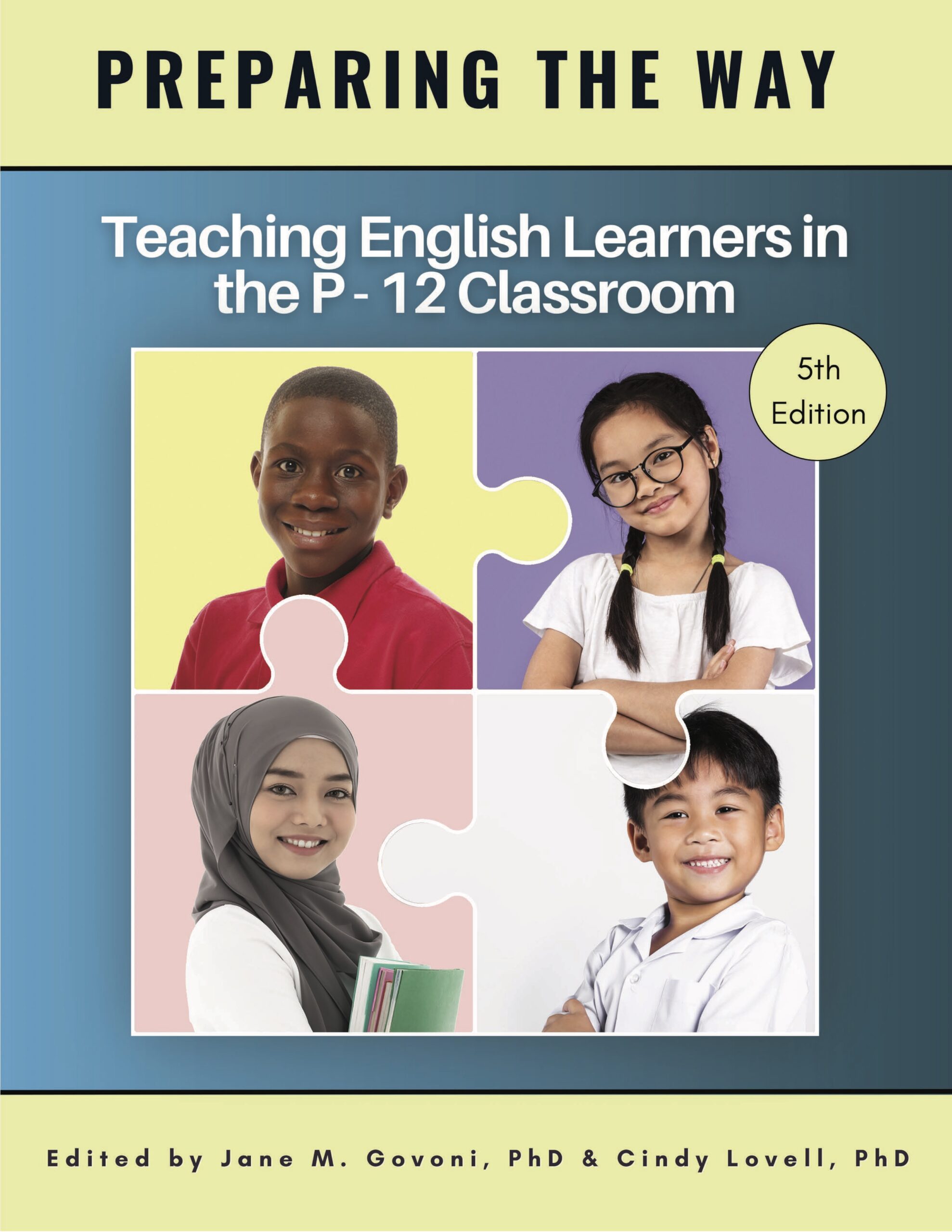
Preparing the Way: Teaching English learners in the P-12 Classroom (5th edition) provides a solid foundation in the study of ESOL. The text addresses legislation, policies, theories of second language learning, applied linguistics, special populations, bilingualism, testing, and evaluation. This newest edition features expanded resources, including more than 60 applicable activities for the K-12 classroom, and a chapter on lesson/unit planning, as well as power points, visuals, and auditory presentations to supplement ESOL coursework in teacher preparation programs and school district ESOL workshops.

In the 2nd edition of Linguistics for P-12 Classroom Application, five classroom scenarios illustrate the language system in action, helping preservice teachers connect linguistic concepts to their own instructional contexts. Through concrete, classroom‑based examples, interactions between P–12 teachers and students demonstrate how linguistic principles unfold in practice, with particular attention to English learners’ proficiency development and academic growth.